Improvements required in Pharmacy education in India

Historical background
Pharmacy education in India dates back to mid 19th century when the Pharmacy courses were introduced in Goa, West Bengal and Madras Medical colleges. These courses primarily focused on compounding and dispensing and not on industrial pharmacy education. First Bachelor of Pharmacy course was started in BHU in 1932 by Prof M.L. Shroff. Similar courses got introduced in other universities in due course of time. There has been continuous improvement in the curriculum over period of time to tailor to industry requirements. Most universities now offer, Bachelors, Masters and PhD programs in the Pharmacy education. The Pharmacy graduates and Post graduates are mostly employed in Pharmaceutical industry of India which has been growing at rapid pace over last couple of decades. Some get employed in Allied industries, Pharmacy colleges / Universities, Hospitals and retail Pharmacies.
Career options in Pharmaceutical Industry
Within Pharmaceutical industry the Pharmacy graduates / Post graduates can get placed in following fields –
1. Research and development
a. Discovery
b. API synthesis
c. Formulation development
d. Analytical development
e. Pharmacology / Toxicology
f. Clinical, BA/BE studies
g. Regulatory affairs
h. Pharmacovigilance
i. Drug device development
j. Biologics development
k. Intellectual Property and Portfolio management
2. Operations
a. Intermediates & API manufacturing
b. KSM manufacturing
c. Drug product manufacturing
d. Biologics manufacturing
e. Device manufacturing
f. Quality control / Quality Assurance
g. Planning / Supply chain / Sourcing / Materials management
h. Technology transfer / Process improvement
3. Sales and Marketing
a. Marketing of API
b. Marketing of drug products
c. Sales & distribution
Knowledge and skills required in various functional areas -
While people working in Pharmaceutical industry need to have overall understanding of Pharmaceutical technology and all subjects which are part of the curriculum, people working in specific functions require more depth in some subjects which are most relevant to their day to day work. A brief summary of subject knowledge and skills required for people working in different functional areas is given below. It should be understood that this is not exhaustive list.
|
Manufacturing
Operations– API |
API manufacturing processes |
|
Organic chemistry |
|
|
Manufacturing equipment (Operating principles,
controls) |
|
|
Utilities (Steam, Water, Nitrogen, Compressed
air, HVAC) |
|
|
Good manufacturing practices |
|
|
Statistical process control and problem- solving
tools |
|
|
Operations management |
|
|
Safety |
|
|
|
|
|
Manufacturing
operations – Drug products |
Drug product manufacturing processes (Unit
operations related to different dosage forms) |
|
Sterility assurance, Aseptic processing and
sterilization processes |
|
|
Manufacturing equipment (Operating principles,
controls) |
|
|
Pharmaceutics |
|
|
Pharmaceutical excipients |
|
|
Utilities (Steam, Water, Nitrogen, Compressed
air, HVAC) |
|
|
Good manufacturing practices |
|
|
Statistical process control and problem- solving
tools |
|
|
Operations management |
|
|
|
|
|
Quality
Operations |
Manufacturing processes |
|
Manufacturing equipment (Operating principles,
controls) |
|
|
Utilities (Steam, Water, Nitrogen, Compressed
air, HVAC) |
|
|
Good manufacturing practices |
|
|
Statistical process control and problem-solving
tools |
|
|
Analytical chemistry and instrumental techniques |
|
|
Microbiology |
|
|
Regulatory guidelines |
|
|
|
|
|
R&D
-Formulation development |
Pharmaceutics |
|
Drug product manufacturing processes (Unit
operations related to different dosage forms) |
|
|
Pharmacology |
|
|
Biochemistry |
|
|
Microbiology |
|
|
Statistics |
|
|
Analytical chemistry |
|
|
Regulatory requirements |
|
|
Intellectual Property |
|
|
|
|
|
R&D
– Discovery & API development |
Medicinal chemistry |
|
Organic chemistry |
|
|
Analytical chemistry |
|
|
Pharmacology |
|
|
Biochemistry |
|
|
Microbiology |
|
|
Statistics |
|
|
Regulatory requirements |
|
|
Intellectual Property |
|
|
Molecular modelling |
|
|
Toxicology |
|
|
Anatomy and Physiology |
|
|
Pharmacognosy |
|
|
|
|
|
R&D
- Biotechnology |
Genetic Engineering |
|
Microbiology |
|
|
Mammalian cell culture |
|
|
Fermentation technology |
|
|
Protein chemistry / characterization |
|
|
Downstream processing |
|
|
Analytical chemistry / Analytical techniques |
|
|
Pharmacology |
|
|
Toxicology |
|
|
Anatomy and Physiology |
|
|
Intellectual Property |
|
|
|
|
|
Sales
and Marketing |
Pharmaceutics |
|
Pharmacology |
|
|
IPR |
|
|
Regulatory requirements |
|
|
Branding and Marketing |
|
|
|
Baseline assessment of quality of Pharmacy education from industry perspective–
While the Pharmacy curriculum is quite exhaustive and covers variety of subjects which are relevant to industry, it has been observed that the people graduating from the Pharmacy courses are not ready to take up the roles in Pharmaceutical industry and have to undergo significant amount of training before they can start contributing independently. The companies normally have elaborate training programs to make fresh graduates ready for work however most of these training program are focused on GMPs and operating procedures which tell the employees how to their job but do not develop link between the core subject knowledge gained in Pharmacy course and the work. Because of this, while people are able to carry out routine activities as per their responsibilities, they lack problem solving abilities.
To get a formal feedback on Pharmacy education from industry leaders, a survey was conducted across 6 major Pharmaceutical companies in India to understand the gaps seen in the knowledge levels of the fresh graduates and improvements required in the curriculum to meet the industry needs. The survey findings were broadly in line with the general assumptions mentioned earlier. The survey findings are summarized below in brief.
1. The B.Pharm graduates are primarily deployed in the Pharmaceutical operations (Manufacturing, QC, QA etc) whereas M.Pharm graduates were primarily deployed in R&D while some were also deployed in operations and other areas.
2. The gaps were reported in the knowledge levels of graduates from both the courses but were relatively more in B.Pharm graduates.
3. Main concern came out was lack of practical exposure to manufacturing and testing equipment and ability to apply the theoretical knowledge gained to actual work.
4. There were many suggestions on inclusion of some specific topics related to operations management and also carrying out projects related to industry.
Apart from the survey, detailed review of the curriculum was carried out by me and specific comments were provided to Pharmacy council of India. General comments about the curriculum design and improvements required in the education system based on my analysis are summarized below.
Summary of findings and improvements required
The current curriculum for both B.Pharm and M.Pharm are in general well designed to provide knowledge required to meet industry needs. Some modifications are required to keep abreast with latest requirements.
While the curriculum was found to be largely good, the graduates from the institutions are not industry ready and have to go through extensive training programs. The main gaps observed are –
1. Most graduates are not able to understand or perform basic calculations involved in the analysis even though it is a part of the syllabus.
2. Unable to operate / run manufacturing and testing equipment.
3. Don’t understand the principles of operations, key process / equipment parameters and their relevance to product quality attributes
4. Not able to design and write operating procedures, validation protocols with sound scientific basis.
5. Unable to conduct scientifically sound investigations (root cause analysis) and prepare good investigation reports
The reasons for these gaps are –
1. Mushrooming of Pharmacy colleges, many of which are not having adequate facilities or teaching staff.
2. Huge increase in number of seats in the established colleges without ensuring availability of adequate facilities.
3. The educational institutions do not have well equipped laboratories, so students do not get practical exposure
4. While theoretical concepts are taught, their application / relevance in the industry are not taught. Due to this students are not able to apply the knowledge to actual work scenarios.
5. Teachers do not have industry experience. Because of this they are not able to connect the theoretical knowledge to industrial applications
6. There is no collaboration between Industry and Academic institutions
7. Project work and research work done as part of curriculum is most of the time of no practical use.
Suggestions for improvement
Improvement is required not just in the curriculum but also the way teaching and assessment is done, Infrastructure and facilities in colleges and also admission policy.
Improvement is also required in the process of approving new Pharmacy colleges and their periodic assessment.
General suggestions to improve the B. Pharm. curriculum -
Course overhaul: Redundant courses like pharmacognosy, chemistry of natural products, dispensing pharmacy can be removed or minimised or altered to suit the current practices. Some of these courses can be offered as specialization in M.Pharm
API manufacturing: API unit processes like, synthesis, product isolation / crystallization, drying, purifications, particle size control etc must be introduced in detail.
Pharmaceutical engineering: Even though this is part of the curriculum the teaching and practicals are highly inadequate. A lot more details must be included in the course itself and practicals need to be designed around the industry applications.
Maths and Statistics: Calculus and Trigonometry need to be covered in greater details along with their Pharmaceutical applications. Starting with basic statistics the course must expand into its application in the pharmaceutical industry. SQC, SPC, acceptance sampling and lean Six sigma tools should be included.
Analytical chemistry & Instrumental
analysis: Working and detection principles of
instruments are covered in the curriculum but their application in the industry
is not covered. Similarly there is no practical exposure even of commonly used
instruments like HPLCs and GCs. Applications of various analytical techniques in
establishing quality of materials should be taught. Practicals should include
use of most of the commonly used instruments.
Pharmaceutical Processes: Unit operations involved in pharmaceutical manufacturing including sterile processes need to be covered in greater details including theoretical aspects, critical process parameters, impact on quality attributes, operating principles of manufacturing equipment, equipment controls etc. Principles of sterilization techniques and aseptic processing need to be covered in detail.
Industrial training: In the current course this is included as desirable. This should be made mandatory.
General suggestions to improve the M. Pharm. curriculum -
1. While courses specializing in single subject like Pharmacology, Pharmaceutical analysis, Pharmaceutics etc are important to develop deep subject knowledge in these areas, new courses aligned to career path need to be introduced such as –
a. Pharmaceutical development (drug product development covering entire gamut of product development till BA/BE studies)
b. Drug discovery (The course should cover complete process of discovering new drug right from identification of target, drug design, drug synthesis, characterization and setting specifications, tox studies, Pharmacokinetics, Pharmacodynamics, pre-clinical studies, clinical studies etc)
c. Pharmaceutical Operations (This should cover all aspects of manufacturing and Quality operations including validations etc. Separate course for Quality assurance should be scrapped)
2. As per current curriculum the project work is spread over two semesters. This should be reduced to single semester to allow more time for teaching.
3. The project work should be done related to industry applications under joint guidance from Industry expert
Improvements required in Teaching methodology -
Teaching:
The teachers are cut off from the industry and teach the subjects from the theoretical point of view. Teachers should have minimum 1 year experience in relevant function in the industry. They should also mandatorily spend a week or two per year in the industry to constantly update themselves with new developments. Teacher’s remuneration should be at par with industry to attract best talent. This can be achieved by assigning industry relevant projects to the teachers with remuneration connected to completion. Selection criteria need to be stringent. Institutes should regularly organize guest lectures by industry experts in the areas where internal teachers do not have adequate expertise.
To improve the technical writing skills, current system of using pre-printed journals, notes etc should be scrapped by reverting back to old system where students had to do these themselves.
Practicals and project work:
The practicals should be modified to include use of manufacturing and testing equipment for actual manufacturing of drug products and testing. These may be done as group activities.
All project work done as part of curriculum should be done in the industry or under joint guidance from industry experts.
All research topics should be approved by joint committee comprising of Academic and Industry experts to ensure that topics are relevant and outcome will be of use to industry / humanity
Infrastructure & Facilities in
colleges :
In addition to existing infrastructure like classrooms, laboratories, library etc, every Pharmacy college should have pilot manufacturing facility meeting current GMP requirement with all manufacturing, testing equipment and utilities routinely used in the industry so that the students can actually use them in their practical work. There should also be animal house and other facilities for Pharmacological and toxicological experiments. Alternatively a common facility may be shared by multiple institutions located in close vicinity. For sophisticated and expensive equipment, Digital Twins should be developed in collaboration with Industry, Machine manufacturers and educational institute.
Assessment:.
Currently the examinations include questions which are repetitive. One can easily score marks by studying past question papers without really studying the subject well. The exams do not evaluate whether the students have understood the concept and able to apply the learning to practical situation. They also don’t evaluate the analytical skills of the student.
The evaluation should be a mix of objective, descriptive questions and semester work in the form of projects which need research and data evaluation. The descriptive questions must be applicative. The purpose of the evaluation should be to assess how much students have understood rather than how well they can memorise and reproduce.
Admission policy –
1. Standardized Admission tests should be used for admission to the courses. These should include evaluation of General Aptitude and specific subject knowledge.
2. The number of seats should be controlled across the country based on the demand to improve quality of the education and employability of the graduates.
Governance of the colleges / Quality of education –
PCI is statutory body under Pharmacy act 1948 with objective of regulating Pharmacy education in the country. Although the major employer of the graduates of Pharmacy colleges is Pharmaceutical industry, there is no industry representation in the executive committee of the PCI. One of more technical persons of repute with industry experience should be part of executive committee.
All colleges need to be periodically rated against predefined metric. The metric should include elements such percentage completion of courses, passing percentage, score percentiles for different subjects, teacher rating, industry projects, publications in international journals etc
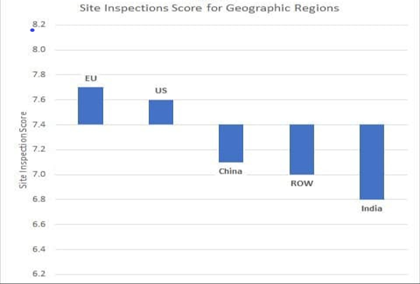
PCI has laid down minimum requirements for facilities required for approval and continued accreditation of Pharmacy colleges. These requirement needs to be upgraded in line with improvements suggested earlier. In spite of the clear requirements laid down by PCI, many colleges manage to circumnavigate these and get accreditation without adequate facilities and teaching staff. The inspection process needs to be made stringent and the inspection team should include industry representative. One time detailed assessment need to be done of all the existing colleges and those not meeting the requirement need to be shut.

Tht forensic pharmacy is not of tht use.
ReplyDeleteIt is not there in current curriculum
ReplyDeleteI agree with you, but PCI and UGC of pharmaceutical is under controlled of academic experts not by technical or industrial experts. Needs to provide opportunities to industrial experts for future of pharma professional.
ReplyDeletePharmaceutica industries are taking B.Sc and M. Sc candiates instead of Pharmacy candidates. Industries shall provide intern ship for pharmacy students
ReplyDelete